
Review · TAIWANESE FOOD TOURS
Street Food Cooking Class in Taipei : Gua Bao/Lu Rou Fan/Boba Tea
Taiwanese comfort food starts with your hands. This two-hour CookInn Taiwan class in Taipei gives you a practical way to understand local xiao chi, or small eats, by making gua bao, lu rou fan, and bubble milk tea yourself. Instead of simply ordering street food, you learn what goes into the soft bun, the pork, and those chewy tapioca pearls.
I like the small maximum group of eight, since cooking is far more enjoyable when you can see the demonstration and ask for help. I also like the useful mix of dishes: savory gua bao, braised pork over rice, and sweet boba tea give you three very different tastes and techniques in one short class.
The main consideration is the price, $79 per person. That is more than a casual Taipei meal, so the value depends on whether you want instruction and a recipe souvenir, not just a cheap lunch. You also need to arrive for the 2:30 pm start at the Zhongshan classroom.
In This Review
- Key points at a glance
- Why Taiwanese street food makes a good cooking class
- Arriving at CookInn Taiwan’s Zhongshan classroom
- Making the gua bao bun from scratch
- Understanding lu rou fan and braised pork
- The tricky business of homemade boba
- A small class with room for questions
- Sitting down to eat the finished meal
- What the $79 price includes in value
- Who should book this Taipei class?
- Cancellation and planning details
- Should you book the CookInn Taiwan class?
- FAQ
- Where does the cooking class begin?
- What time does the class start?
- How long does the experience last?
- Where does the class end?
- How many people can join the class?
- What dishes will I learn to make?
- Do I get to eat the food I prepare?
- Is this class suitable for children?
- What is the price?
- Can I cancel for a refund?
Key points at a glance
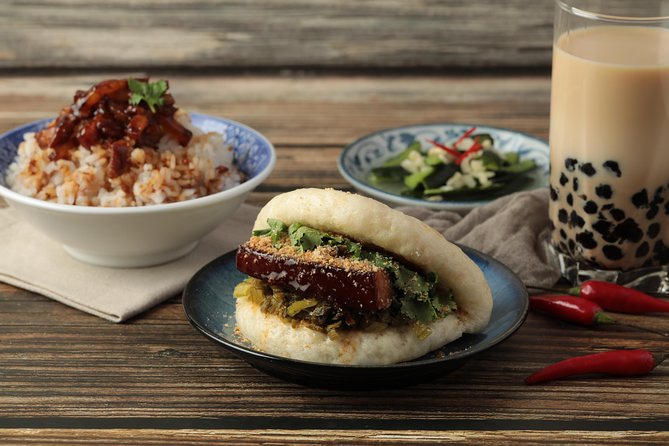
- Make gua bao from scratch: Learn how to prepare the steamed buns and pair them with braised pork belly.
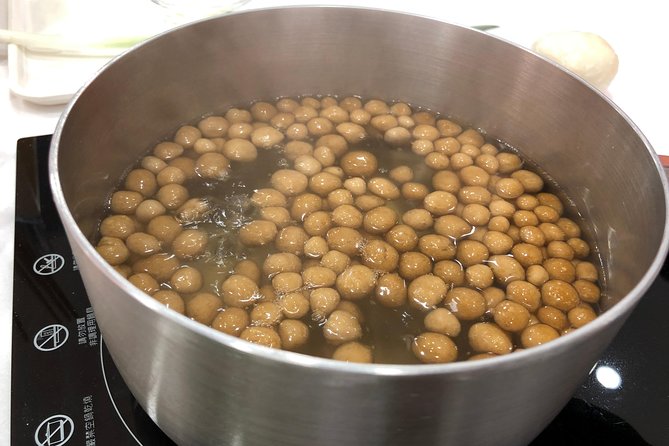
- Try homemade tapioca pearls: Making boba by hand is part of the class, and it requires more work than simply shaking a drink.
- Small-group teaching: The class accepts a maximum of eight people, allowing more direct help during each recipe.
- Eat what you prepare: The session ends with a homemade meal rather than a quick demonstration and goodbye.
- Suitable for families: Children aged 8, 10, and 11 were happily included in one class, with the teacher guiding them patiently.
- Take the recipes home: A recipe book gives you a useful souvenir and a chance to repeat the dishes after Taipei.
Why Taiwanese street food makes a good cooking class
Taipei’s street-food culture is built around compact, satisfying dishes. The word xiao chi means small eats, but these foods are not minor in importance. They are everyday comfort food, quick meals, and a major part of how Taiwan eats.
This class works well because the menu covers several parts of that food culture. Gua bao brings together a steamed bun, rich pork belly, and familiar toppings. Lu rou fan, or braised pork rice, focuses on the slow-building flavor of seasoned pork. Bubble milk tea adds a drink that has become famous far beyond Taiwan.
You get more than three recipes. You learn how Taiwanese food balances soft textures, savory richness, sweetness, and chew. That makes the class useful for anyone who has been eating around Taipei and wants to understand the cooking behind the dishes.
More workshops and classes in Taipei:
- Xiao Long Bao, Beef Noodles & Boba Tea Cooking Class in Taipei
★ 5.0 · 159 reviews - Xiao Long Bao, Chicken vermicelli with mushroom and sesame oil, Tofu strips salad, Bubble milk tea. Taiwan Traditional Delicacies Experience-A (Taipei Cooking Class)
★ 5.0 · 79 reviews - Taipei Cooking Class & Market Adventure in Historic Dadaocheng
★ 5.0 · 77 reviews
Arriving at CookInn Taiwan’s Zhongshan classroom
The class begins at CookInn Taiwan, Zhongshan classroom, at 66 Section 1, Chengde Road, second floor, in Datong District. The listed start time is 2:30 pm, and the activity returns to this same meeting point when it ends.
Give yourself enough time to find the building and classroom. The address includes a section number and a second-floor location, so checking the exact route before leaving your hotel is sensible. The information provided does not specify hotel pickup or transportation, so you should plan to make your own way there.
A mobile ticket is accepted, and booking confirmation is issued at the time of booking. Those details make the arrival process fairly simple, but the fixed start time matters. A cooking class cannot easily wait for late arrivals once ingredients are being measured and prepared.
Making the gua bao bun from scratch
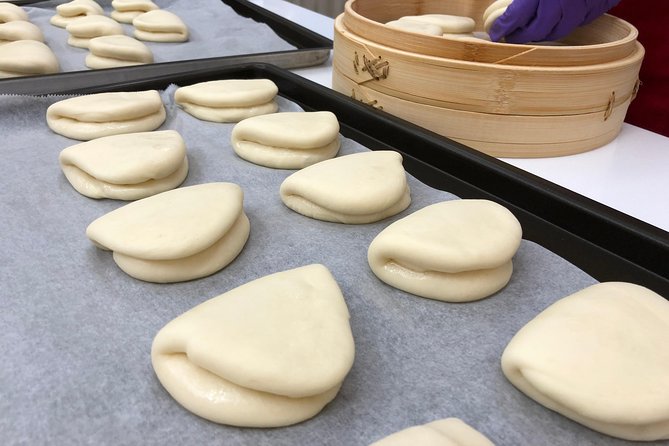
Gua bao is often described as a Taiwanese hamburger, though the comparison only goes so far. Instead of a cut bread roll, you get a soft, folded steamed bun that holds braised pork belly and other fillings.
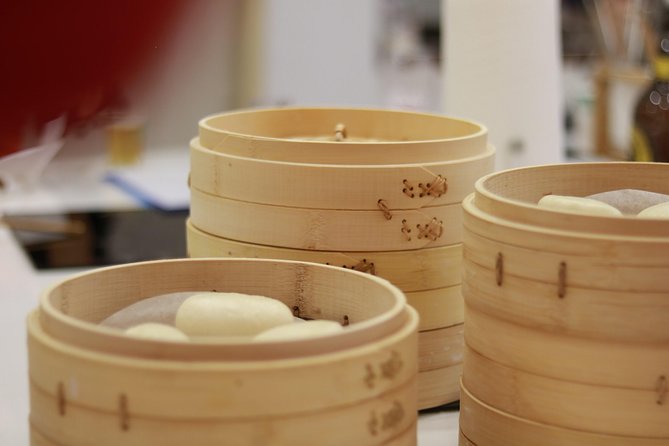
One of the most appealing parts of this class is learning to make the buns. You are not only assembling a finished snack. You work through the process that creates the tender, slightly springy bread, with instruction on how to handle and steam it.
The bun is the heart of the dish. If it is too firm, it cannot cradle the pork properly. If it is too heavy, it loses the light texture that makes gua bao so pleasant. Having a teacher guide the process is useful, especially if you hope to repeat the recipe at home.
The pork belly supplies the richness. The class teaches the basic tips for braising it, helping you understand how the meat develops its soft texture and savory taste. The class materials do not give a detailed list of seasonings or cooking equipment, so you should treat this as a guided introduction rather than a full professional cooking course.
This part of the session receives the strongest praise. The gua bao is repeatedly singled out as the favorite dish, and it is easy to see why. You get the satisfaction of building the bun and then filling it with pork you helped prepare.
Understanding lu rou fan and braised pork
Lu rou fan is braised pork served over rice, another classic Taiwanese comfort dish. It uses some of the same broad flavor ideas as gua bao, but the rice changes the experience. Instead of holding the pork in a bun, it gives the sauce a plain, warm base.
The class includes instruction on the braised pork, while the rice is prepared for serving. That distinction is worth knowing. You are learning the key meat preparation, but the session is not making every part of the meal from raw ingredients.
For you, the value is in seeing how a relatively humble cut of pork becomes a full meal through braising. It is a useful contrast with gua bao, where the bun is the main hands-on project. The lu rou fan also makes the menu feel substantial, since you finish with both a snack-style dish and a rice meal.
One practical point is that the pork is rich. If you prefer lighter food, the gua bao and lu rou fan may feel filling when eaten together. The class tells you to arrive hungry, and that is good advice. You are preparing several dishes and then sitting down to eat them.
More food tours in Taipei:
- The Award-Winning Private Food Tour of Taipei: The 10 Tastings
★ 5.0 · 716 reviews - Taipei: Food Tours w/ Top 10 Taiwan Food (Breakfast/Dinner)
★ 4.7 · 517 reviews - Taipei: Private Food Tour – 10 Tastings with Locals
★ 4.9 · 218 reviews - Taipei: Street Food & Hidden Eats Night Market Food Tour
★ 4.8 · 112 reviews
The tricky business of homemade boba
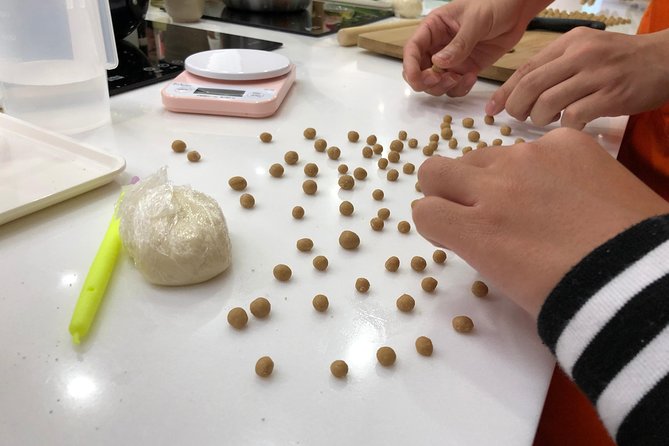
Bubble milk tea looks simple when you buy it from a shop. Add pearls, pour in tea and milk, shake, and serve. Making the chewy tapioca pearls from scratch is a different matter.
The class lets you prepare the pearls yourself, then shake your own cup of bubble milk tea. This is a fun change of pace after working with bread and pork, but it is also the most technically demanding part according to the experience details.
The difficulty is part of the lesson. Homemade boba depends on getting the texture right. Too soft, and the pearls lose their chew. Too firm, and they become unpleasantly hard. The class gives you a chance to see the process rather than treating tapioca pearls as a mysterious topping that appears at the bottom of a plastic cup.
You should not expect this step to be effortless. That makes it a good activity for people who enjoy hands-on work and do not mind a recipe requiring patience. It may be less appealing if you only want a quick drink or a relaxed tasting session.
Still, the finished drink provides a sweet ending to the class. You shake it yourself, which gives the final step a bit of ceremony and makes the familiar drink feel newly interesting.
A small class with room for questions
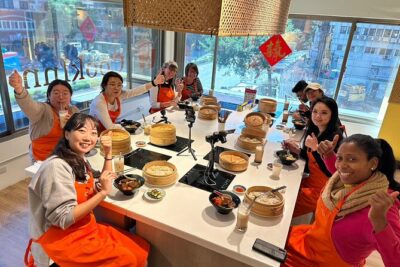
The maximum group size is eight people. That is a practical advantage in a cooking lesson, where the quality of the experience often depends on whether the instructor can see what you are doing.
A large class can leave you watching from the back or waiting for help with a sticky dough, difficult shaping step, or unfamiliar cooking method. With eight or fewer people, you have a better chance of receiving direct guidance.
The teacher named in the supplied feedback is Angela. She is described as friendly, capable, interesting, patient, and clear when explaining each step. That combination matters more here than a long lecture. You need instructions that are easy to follow while your hands are busy.
The class also worked well for a family with children aged 8, 10, and 11. The teacher involved them in the process and helped them participate. That makes this a reasonable choice for families who want an activity with food, though parents should still decide if a two-hour cooking session suits their children.
Sitting down to eat the finished meal
The class ends with time to eat what you have made. This is an important part of the experience, not an afterthought. You can see the result of the work, compare the textures, and enjoy the dishes while the process is still fresh in your mind.
The meal includes the gua bao, lu rou fan, and bubble milk tea prepared during the class. Since you have worked on the dishes, you may notice details you would miss at a street stall, such as the texture of the bun or the chew of the pearls.
The food is also the clearest measure of the class. The gua bao receives the most enthusiastic praise, while the lu rou fan is described as good. The boba process is considered difficult but rewarding. I would keep those distinctions in mind rather than expecting every item to be equally easy or equally impressive.
You should arrive hungry, but not so hungry that you are uncomfortable while waiting for the food to cook. The class lasts about two hours, and the dishes are prepared before you sit down to eat.
What the $79 price includes in value
At $79 per person, this is not a budget meal. You can find inexpensive street food in Taipei for much less. The question is what you want from your afternoon.
The price makes more sense if you value:
- Hands-on instruction instead of a simple food tasting
- A maximum group of eight people
- Three well-known Taiwanese foods in one class
- A meal at the end
- A recipe book to take home
- A structured activity lasting about two hours
The recipe book adds lasting value. You can try the dishes again at home, which is one reason this class may be more memorable than a meal that disappears as soon as you finish it.
The price is harder to justify if you mainly want to sample food cheaply, or if you already cook these dishes confidently. You are paying for teaching, ingredients, use of the classroom, and the chance to make foods that can be tricky to reproduce without guidance.
With a 5.0 rating from 22 reviews and a 100 percent recommendation rate, the class has a strong record. That does not remove the price consideration, but it suggests that the format has worked well for people looking for a fun and practical food activity.
Who should book this Taipei class?
I would suggest this class to you if you enjoy food and want to do more than take pictures of it. It suits first-time visitors who want a direct introduction to Taiwanese cooking, as well as returning visitors who have already eaten gua bao or lu rou fan and want to learn the basics behind them.
Families can also consider it. The class successfully included children aged 8, 10, and 11, and the teacher was patient with them. The small group should help keep children involved rather than leaving them at the edge of a crowded demonstration.
It is also a good fit for home cooks. The recipe book gives you something concrete to use after the trip, and the dishes are recognizable enough to share with family and friends.
I would be more cautious if you dislike rich pork dishes, sweet drinks, or practical kitchen work. This is not a passive tasting. You will be involved in dough, braising, tapioca pearls, and assembly. The boba step in particular may test your patience.
The class starts at 2:30 pm, so it can fit neatly into a Taipei day. It finishes at the same place where it begins, with no separate end point to arrange. You should confirm the location and allow time to arrive before the fixed start.
Cancellation and planning details
You can cancel for a full refund up to 24 hours before the local start time. Changes or cancellations made less than 24 hours in advance are not accepted for a refund.
The activity requires a minimum number of participants. If that minimum is not met and the class is canceled, you are offered another date or experience, or a full refund.
The maximum is eight people, but the supplied information does not state the exact minimum. Confirmation arrives when you book, and the mobile ticket is useful for entry.
Should you book the CookInn Taiwan class?
Book it if you want a hands-on food lesson, not simply a cheap lunch. The small group, friendly instruction from Angela, homemade gua bao buns, braised pork, and made-from-scratch boba give you a well-rounded look at Taiwanese street food.
The gua bao is likely to be the highlight, while the boba takes the most patience. At $79, the class is best treated as a cooking experience with a meal and recipe book included, rather than a bargain dining stop.
If that sounds worthwhile, this is a strong two-hour choice for couples, families, and curious home cooks. Arrive hungry, allow time to find the Zhongshan classroom, and book only if you can keep the 24-hour cancellation window in mind.
FAQ
Where does the cooking class begin?
It begins at CookInn Taiwan, Zhongshan classroom, at 66 Section 1, Chengde Road, second floor, Datong District, Taipei, Taiwan.
What time does the class start?
The class starts at 2:30 pm.
How long does the experience last?
The class lasts approximately two hours.
Where does the class end?
The activity ends back at the same meeting point where it begins.
How many people can join the class?
The maximum group size is eight people.
What dishes will I learn to make?
You will learn to make gua bao, lu rou fan, and bubble milk tea. The class includes making the steamed buns, braising pork belly, and preparing tapioca pearls from scratch.
Do I get to eat the food I prepare?
Yes. The class ends with a meal featuring the food prepared during the session.
Is this class suitable for children?
The class has included children aged 8, 10, and 11, with the teacher involving them in the activities. The provided information does not state a formal minimum age.
What is the price?
The listed price is $79 per person.
Can I cancel for a refund?
Yes. You can cancel at least 24 hours before the experience start time for a full refund. Cancellations or changes made less than 24 hours before the start are not refunded or accepted.
More Tea Tastings in Taipei
- From Taipei: Thousand Island Lake and Pinglin Tea Plantation
★ 4.7 · 519 reviews - Thousand Island Lake and Pinglin Tea Plantation from Taipei
★ 4.5 · 172 reviews - From Taipei: Pinglin Tea Culture and Maokong Guided Day Tour
★ 4.8 · 104 reviews - Tea of Taipei: Small-Group Tour with Taipei City Sightseeing
★ 5.0 · 63 reviews
Just added in Taipei
- Taipei: 8 Hours Private Day Tour in Wulai with Benz Vito★ 4.4 · 5 reviews
- Vintage Taipei – Best of Taiwan and Sunset Walking Tour★ 5.0 · 4 reviews
- One Day Tour of Yilan, Zhang Mei Ama Farm★ 5.0 · 2 reviews
- Yilan Whale Watching and Animal Farm Private Tour from Taipei★ 5.0 · 1 review
- Yilan Rural Tea Picking Experience from Taipei City★ 5.0 · 1 review
- Yilan 1-Day Private Tour to Kavalan Whisky & Cultural Gems★ 4.5 · 3 reviews
- Yilan Kavalan Whisky Distillery,Jim&Dad’s Brewing, Shenkeng Tour★ 5.0 · 1 review
- Yangmingshan National Park & Hot Spring Tour (afternoon )★ 3.0 · 2 reviews
Taiwanese Food Tours, compared.
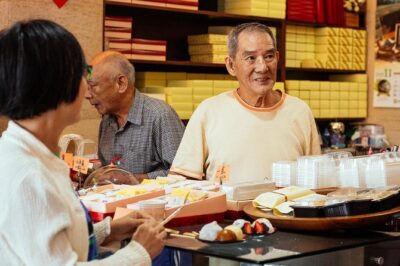
The Award-Winning Private Food Tour of Taipei: The 10 Tastings
Read our review →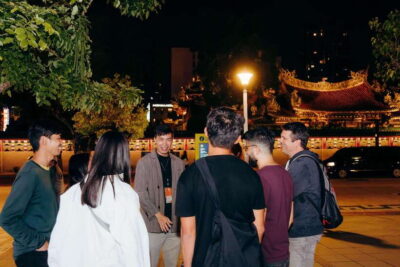
Food Tours w/ Top 10 Taiwan Food (Breakfast/Dinner)
Read our review →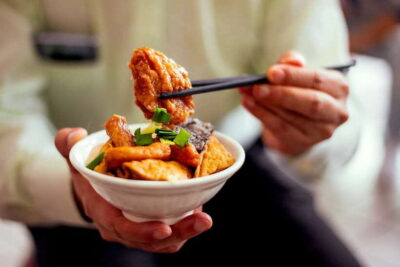
Xiao Long Bao, Beef Noodles & Boba Tea Cooking Class in Taipei
Read our review →
Street Food & Hidden Eats Night Market Food Tour
Read our review →
Taipei Hidden Eats, Market & Street Food Tour with 8+ Tastings
Read our review →
Taipei Food Tour: Night Market & Convenience Store(Food Included)
Read our review →Browse the lists this tour appears in